Anerosei: Difference between revisions
No edit summary |
mNo edit summary |
||
| Line 25: | Line 25: | ||
==== II. False Idols ==== | ==== II. False Idols ==== | ||
<blockquote>They are sinners who hast given themselves, their heart, body and soul, to another god for I am the One, and all others before Me are false idols.</blockquote>Aneros strictly condemns those who worship false idols and "gods", for they are worshipping demons. He proclaims that He is the One, and all others before Him are false, pretenders and will not just be rejected by the true and virtuous, but will also fall before the might of Him and His followers. | <blockquote>They are sinners who hast given themselves, their heart, body and soul, to another god for I am the One, and all others before Me are false idols.</blockquote>Aneros strictly condemns those who worship false idols and "gods", for they are worshipping demons. He proclaims that He is the One, and all others before Him are false, pretenders and will not just be rejected by the true and virtuous, but will also fall before the might of Him and His followers. | ||
==== III. Seven Mortal Sins ==== | |||
<blockquote>III. Foul are they who hath fallen in their heart to the seven mortal sins of lust, gluttony, greed, sloth, wrath, envy and pride. In doing so they waste My gift of life on selfish endeavours, and they shalt find no rest in this world or the next.</blockquote>Aneros condemns those that would use His greatest gift to us, life, in immoral and wasteful ways. To use life in such wasteful and selfish ways is not only to reject Aneros, but to reject self. Aneros warns that going down such paths will lead to a person's soul remaining within the Nether for the rest of time. | |||
==== IV. Harming Others without Provocation ==== | |||
<blockquote>IV. All of Man are the work of My loving hand: from lowliest servant to highest king, woe on them who bring them harm without provocation.</blockquote>This Precept lays the groundwork for self-defense and justice. When judged in front of Aneros after dying all men are made equal, and so regardless of who commits misdeed, those who do will be judged accordingly. | |||
==== V. False Witness ==== | |||
<blockquote>V. Damned be they who bear false witness, break their oath or honour and work to deceive. Let them know this, there is but one truth: all things are known to Me, and I shall judge thee on thy lies.</blockquote> | |||
=== Anerosei Virtues === | === Anerosei Virtues === | ||
Revision as of 07:08, 23 March 2025
𐌰𐌴𐌸𐌴𐍂𐌹𐍉𐍃 𐌴𐌺𐌺𐌻𐌴𐍃𐌹𐍉𐍃 𐌴𐌹𐍃 𐌰𐌽𐌴𐍂𐍉𐍃
Aetherios Ecclesios eis Aneros 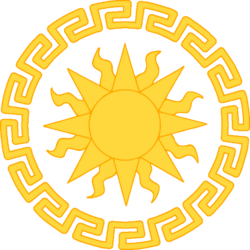

| Founding (Lore) | 1 PA |
|---|---|
| Founding (Real Life) | 21st March 2025 |
| Leaders | Konstantious Cestari (Founder) Melevor Cestari (Incumbent) |
| Scripture | Aethereal Sacrament
𐌰𐌴𐌸𐌴𐍂𐌹𐍉𐍃 𐍃𐌰𐌺𐍂𐍉𐍃𐌼𐌴𐌽𐍄𐌰𐍂𐌿𐌼 Aetherios Sacrosmentarum |
| Language | High Solyssian |
| Place of Origin | Solestra, Astarios |
| Theology | Anerosei |
| Number of Followers | 3 |
The Aethereal Ecclesiarchy of Aneros (High Solyssian: 𐌰𐌴𐌸𐌴𐍂𐌹𐍉𐍃 𐌴𐌺𐌺𐌻𐌴𐍃𐌹𐍉𐍃 𐌴𐌹𐍃 𐌰𐌽𐌴𐍂𐍉𐍃, translit. Aetherios Ecclesios eis Aneros) also known as the Ecclesiarchy, its High Solyssian equivalent - Ecclesios - or simply as Anerosei, is the state religion of the Anercratum of Astarios, a theocratic absolute monarchy from which Anerosei originated. The Ecclesiarchy is headed by the Anercrat, a High Solyssian word which most literally translated into English is "God's Ruler". The Anercrat of the Ecclesiarchy is, in tradition with his ancestors, always held by the eldest male (and therefore head) of House Cestari, as the title is hereditary and has been passed down from the founder of the Ecclesiarchy and Solestra, Konstantious Cestari all the way to his descendant Melevor Cestari, the current Anercrat.
The Ecclesiarchy teaches that the Anercrat descends from a long an ancient bloodline of previous divinely mandated rulers originating from the bloodline of Ior, the son of Aneros, the sole God of the Faith, and thus is given a divine mandate from the heavens. The hierarchy of the Ecclesiarchy is built upon the infallibility and supremacy of the Anercrat, who assigns a number of Ecclesiarchs, typically highly experienced Solestran clergymen, to help govern the Ecclesiarchys day-to-day functions. There are a number of positions below, including Primates, Patriarchs, Archprelates, Prelates, Archpriests, and Priests.
Anerosei is a monotheistic faith, through which one God created all things. First creating the Flame of Creation (and thereby fire and light), Aneros used the Flame to create all things including the Aeons - angelic figures, the Realms of Aether, Nether, Munda and Nihilum, humanity and it's derivatives, plants and all living life. Anerosei believe that within all things good that a "soul flame" burns - a small part of the Flame of Creation and Aneros himself. The Sun takes a central part of the religion's symbolism as it is seen as a symbol of Aneros' will, dominance and victory over all things and spreads His light throughout all of His domain of creation.
Etymology
The term Ecclesiarchy (High Solyssian: 𐌴𐌺𐌺𐌻𐌴𐍃𐌹𐍉𐍃, translit. Ecclesios) originates from Ancient Solyssian, and it is believed the Ecclesiarchy has existed in some form or another for hundreds of years. Ecclesios derives from the ancient "gathering" or "get-together" or "invoking", where it is believed the ancient Solyssians gathered around stone circles with flames in the middle to worship Aneros, and invoke his name and presence among them.
This has developed into the modern High Solyssian Ecclesios, and the Common Ecclesiarchy.
Beliefs
1
Golden Precepts
The Golden Precepts are the religious commandments of Aneros given to his son, Ior for his people Solyssia, and for all humanity when they should convert. The words were carved into bark from ancient tree near where Aneros spoke to Ior, and have been engraved in gold. The original Precepts remain in the care of the Ecclesiarchy within the Aneriad.
I. Obedience to Aneros
I. For thee and for thy brothers and sisters I hath created this world, and the heavens, if they obey Me through thee and thy teachings they will find eternal rest by my side in the Aether, for just as I created the heavens and the earth, I too created the Nether for the disobedient, evil and malicious.
Aneros directly tells us that He created this world, and all other Realms and things, and that if we are obedient to Him through the teachings of the Ecclesiarchy that we will find rest by his side in the Aether once we pass from the material world. He warns us that if we do not uphold His laws and teachings that we will be forever damned to the Nether for disobedience, evil, and for malice.
II. False Idols
They are sinners who hast given themselves, their heart, body and soul, to another god for I am the One, and all others before Me are false idols.
Aneros strictly condemns those who worship false idols and "gods", for they are worshipping demons. He proclaims that He is the One, and all others before Him are false, pretenders and will not just be rejected by the true and virtuous, but will also fall before the might of Him and His followers.
III. Seven Mortal Sins
III. Foul are they who hath fallen in their heart to the seven mortal sins of lust, gluttony, greed, sloth, wrath, envy and pride. In doing so they waste My gift of life on selfish endeavours, and they shalt find no rest in this world or the next.
Aneros condemns those that would use His greatest gift to us, life, in immoral and wasteful ways. To use life in such wasteful and selfish ways is not only to reject Aneros, but to reject self. Aneros warns that going down such paths will lead to a person's soul remaining within the Nether for the rest of time.
IV. Harming Others without Provocation
IV. All of Man are the work of My loving hand: from lowliest servant to highest king, woe on them who bring them harm without provocation.
This Precept lays the groundwork for self-defense and justice. When judged in front of Aneros after dying all men are made equal, and so regardless of who commits misdeed, those who do will be judged accordingly.
V. False Witness
V. Damned be they who bear false witness, break their oath or honour and work to deceive. Let them know this, there is but one truth: all things are known to Me, and I shall judge thee on thy lies.
Anerosei Virtues
2
Ancestor Veneration
2
Sins
2
Proselytisation
2
Symbology
1

Great Solas
Since time immemorial the symbol of the Faith has been the Sun. The ancient Solyssians believed that the Sun was Aneros' greatest symbol of victory over the forces of evil, the most identifiable symbol to a mortal that He could be, for He is beyond mere mortal comprehension. The Sun has time and time again been linked to miracles of Anerosei, most notably the Awakening of Aneros, when a solar eclipse occurred. The Sun is venerated as the bringer of life and light, banishing the darkness which shrouds the world each night and ushering in a new day. Differing from a standard Solas, the Great Solas is the sun which is in use by the Ecclesiarchy featuring 8 pointed peaks, and 8 jagged peaks. This depiction of the Solas is used both as a seal of the Ecclesiarchy, and as a flag, typically depicted with an Anerosei halo around it representing it being a sacred symbol.
Aneros
Over time there has been various depictions of Aneros, some depict him to in the form of a giant white Elk with golden antlers, an animal native to the ancient Solyssian homeland or as a white ram with similar golden features. These animalistic depictions have vanished as time has gone on. Since the Awakening of Aneros there have been two ways of depiction of the God among religious works which gain the backing and support of the Ecclesiarchy. The first is to depict Him as a humanoid of pure flame - as if the Sun were a man, walking, and talking. The second is to depict Him in a similar manner to the Cestar, as beliefs of the two becoming one have circulated in mysticism since the days of the Sacrifice, clad in the iconic golden and masked armour depicting a man with sun rays protruding from his helmet.
Aethereal Sacrament
1
History
1
Subdivisions and Structure
The primus inter pares of these Ecclesiarchs is the Ecclesiarch of Solestra, who is the Chancellor of the Ecclesiarchy, and who serves as the Prelate of the Aneriad, the Faith's main church. Below the Ecclesiarchs is the position of Primate, who are two clergyman appointed by the Anercrat to oversee the affairs of the Ecclesiarchy in the two hemispheres of the world - east, and west. Below a Primate is a Patriarch, a clergyman who oversees a large territory and a number Prelacies known as a Patriarchy - typically a continent, sub-continent or large country. Below a Patriarch is the posts of Archprelate and Prelate, the positions most similar to that of a Bishop, overseeing numerous Anerchorias from a Cathedral known as a Prelacy, an Archprelate has the same authority as a regular Prelate, they are simply recognised as senior. The two most common positions within the Ecclesiarchy's hierarchy are those of Archpriest and Priest, both of which oversee a similar type of ministry, but of different forms, known as a Anerchoria. An Archpriest oversees a Chantry which is fixed, as in it is bound to an appointed geographical position like a Choria building. A Priest, on the other hand, is a wandering priest-missionary, who conducts Anerosei masses and rituals without a fixed Choria building and works to convert others. The distinction between the two is a recent one emerging from the reforms of Anercrat Melevor Cestari.
Anercrat
2
Ecclesiarchat
2
Prelatorium
2
Primate
3
Patriarch
3
Archprelate
3
Prelate
3
Priesthood
2
Archpriest
3
Priest
3
Clerics
2
Grand Cleric
3
Cleric
3
Organisations
1
Exalted and Anointed
1
Holy Sites
1
Sacred Items
1
Ceremonies and Masses
1
Holy Mass
2
Holy Days and Festivals
1
Prayers and Hymns
1
Language
1
High Solyssian
2
Common
2